
Working with Chinese counterparties and arbitration in Mainland China: insights from the Asari Legal business breakfast
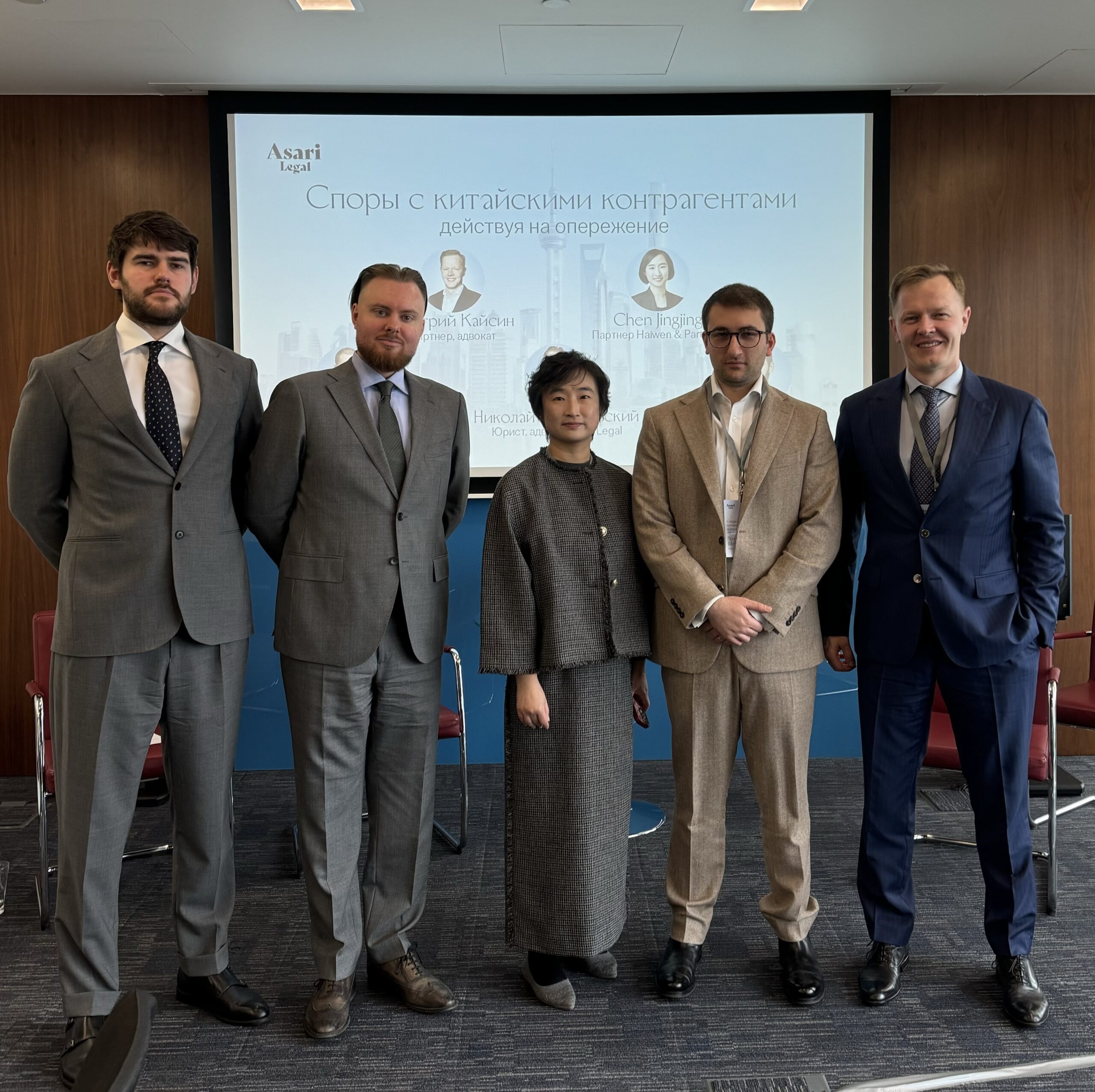
On 1 December 2025, Asari Legal hosted a business breakfast for heads of legal from major Russian companies, with presentations by experts from Asari Legal and guest speaker Chen Jingjing, partner at the Chinese law firm Haiwen & Partners.
The event was moderated by Dmitry Kaysin, partner and co-head of Asari Legal’s Dispute Resolution practice. Mr Kaysin spoke of the variegated experiences of his firm’s lawyers in disputes with Chinese suppliers and the increasing demand for litigation support in Hong Kong, Mainland China and Russia from both Russian and Chinese businesses.
Associate Nikolay Sokolovsky opened the session with an overview of the principal arbitral institutions in Mainland China, their rules, and their procedural frameworks.
Chen Jingjing shared her experiences acting as an arbitrator and counsel in international arbitration proceedings in Mainland China, and explained how they compared with disputes administered under HKIAC and ICC rules
A significant part of the conversation focused on the choice of governing law — Russian, Chinese, or English — in cross-border contracts for the sale of goods. Chen Jingjing compared key provisions of the Chinese and Russian Civil Codes, discussing contract drafting and conclusion, available remedies, and common objections raised by Chinese counterparties.
Paul-Raphael Shehadehsolicitor and counsel at Asari Legal, contributed a comparative perspective on English law governing the sale of goods, the mechanisms for protecting buyers’ interests, and how sanctions considerations affect contracts involving Russian parties
Associate Stepan Rusanov addressed issues related to the recognition and enforcement of Chinese court judgments in Russia and the reciprocal enforcement of Russian arbitral awards in China.
Concluding the session Chen Jingjing presented an overview of Chinese case law enforcing Russian court judgments and arbitral awards, outlining the relevant legal grounds, trends, and challenges that arise in parallel proceedings, including those associated with the application of the "Lugovoy Law".